








When an emergency lighting battery fails, it can be hard to know exactly what replacement is needed.
Sometimes, choosing a battery with the same voltage might seem sufficient — but in reality, it’s not always that simple.
Why this causes issues with emergency batteries
Matching voltage alone is not enough. Incorrect battery substitutions are one of the most common causes of failed emergency tests, call-backs, and non-compliance.
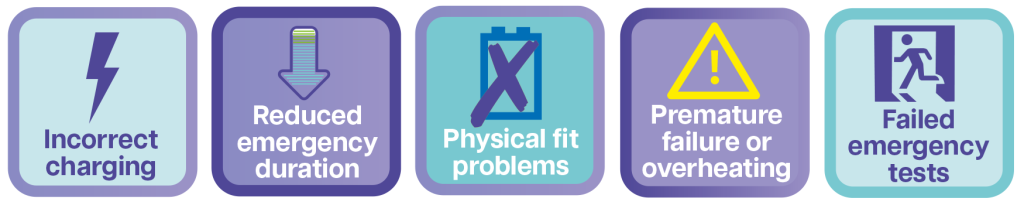
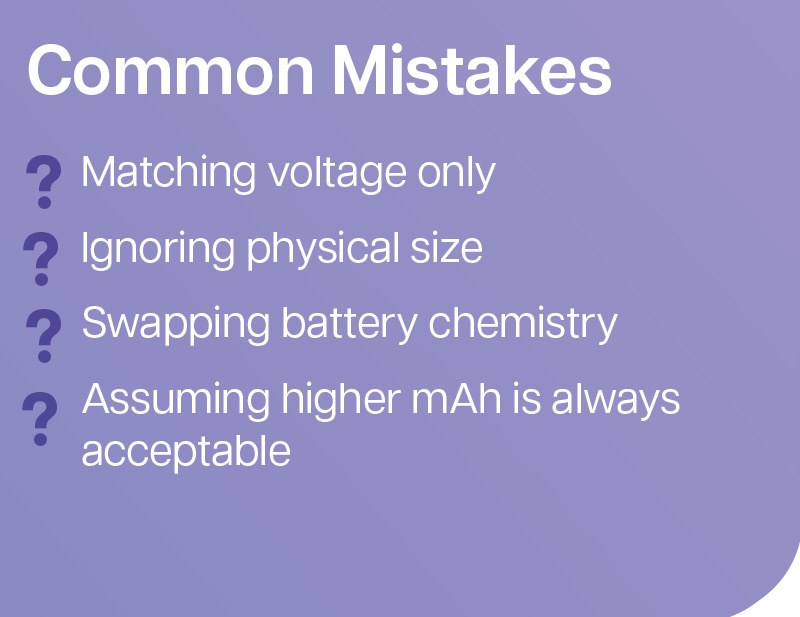
Two emergency batteries may appear similar on paper, but small differences can cause big issues like:
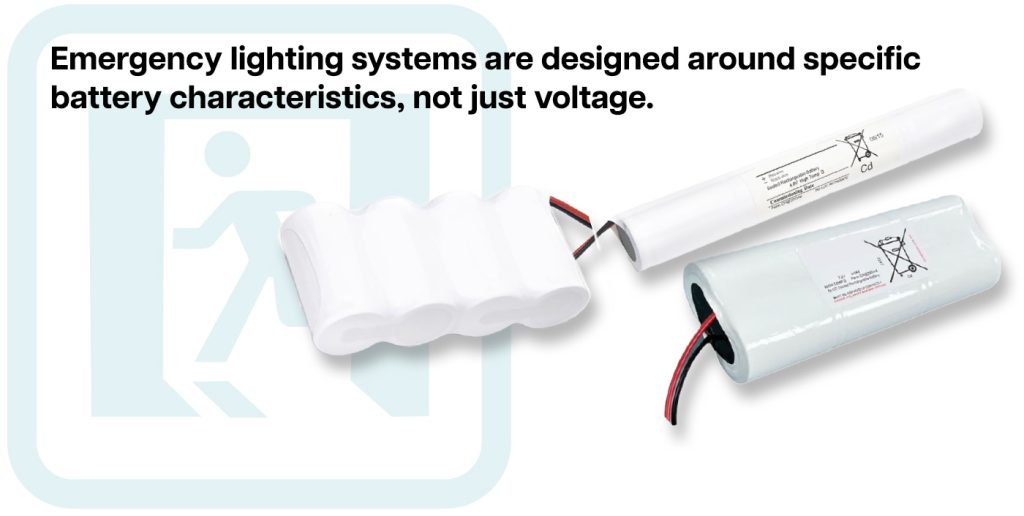
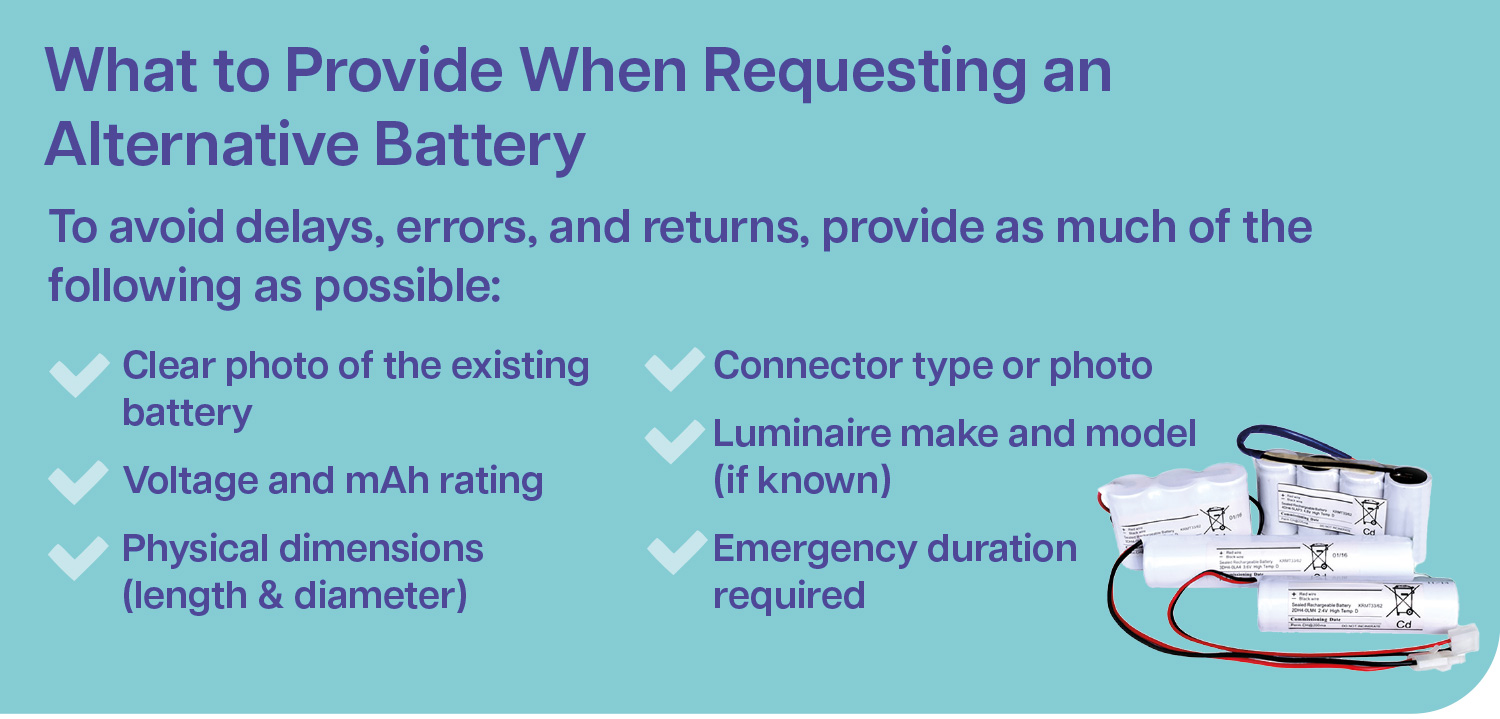
7 Things to Check Before Requesting an Alternative Battery

Common types include:
Ni-Cd (Nickel Cadmium); NiMH (Nickel Metal Hydride); Li-ion
These are not interchangeable unless the control gear is designed for it.

Typical voltages include: 3.6V; 4.8V; 6.0V
Voltage must match exactly unless advised otherwise by a specialist.

Capacity determines how long the luminaire will operate in emergency mode.
The replacement battery must meet or exceed the original while remaining compatible.
Bigger is not always better if the charger is not designed for it.

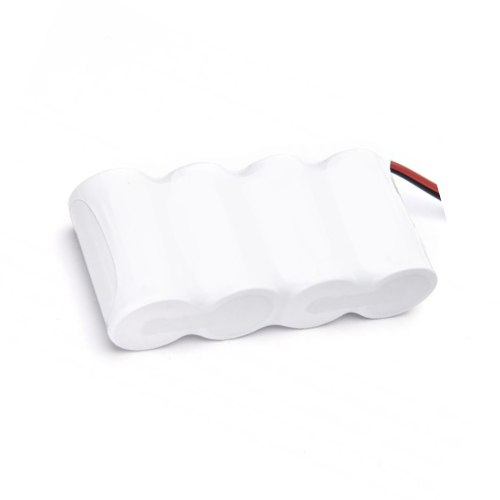
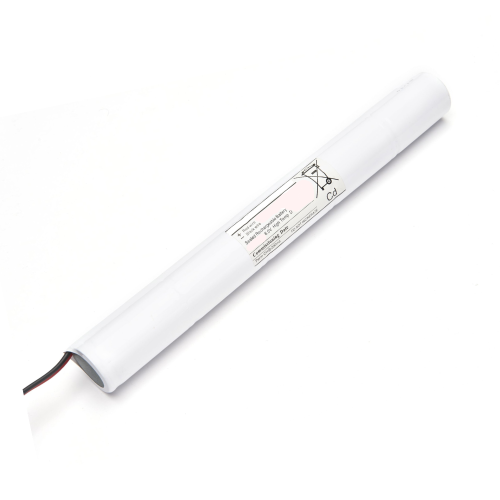
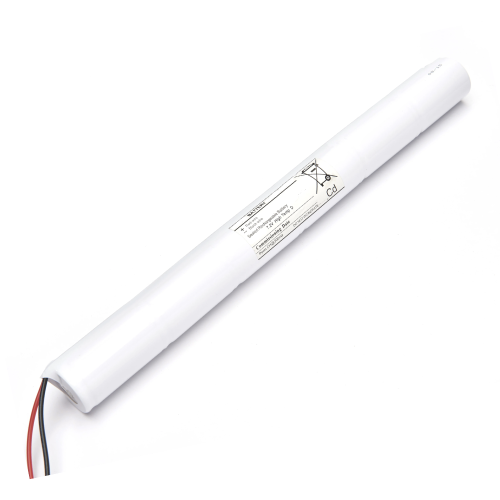
Length; Diameter; Stick vs block configuration.
Older luminaires often have very limited space, especially bulkheads and downlights.

JST; Molex; Flying leads; Polarity orientation.
A correct battery with the wrong connector still won’t work safely.

The number of cells affects: Voltage; Charging profile; Heat generation.
This is critical when substituting batteries in older fittings.

1-hour vs 3-hour systems.
Regulatory and site requirements.
A replacement must maintain the required emergency duration to remain compliant.
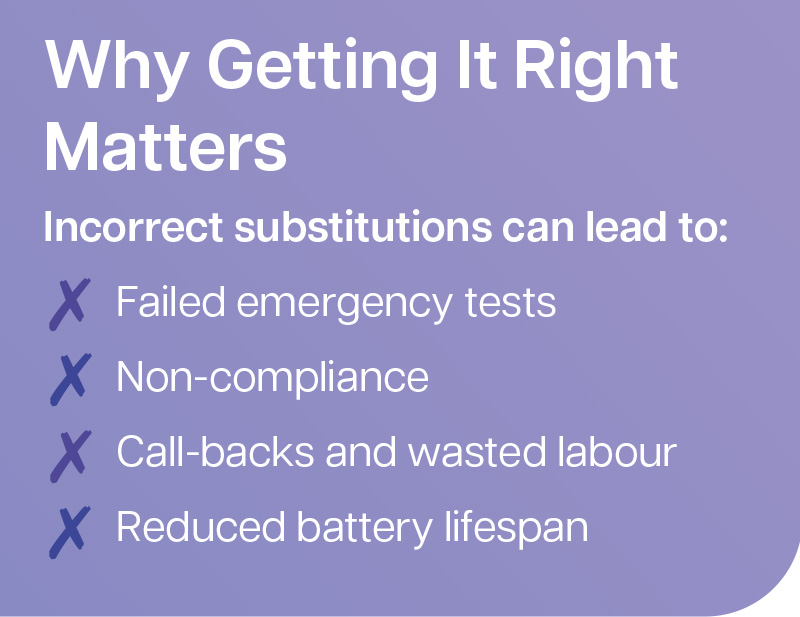
The Consequences of Mistakes & The Solution

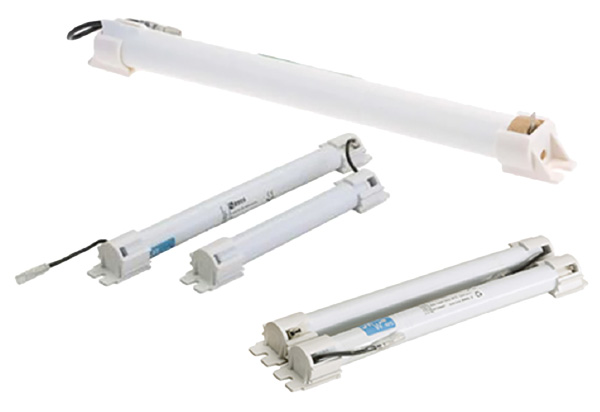
Emergency Batteries
-
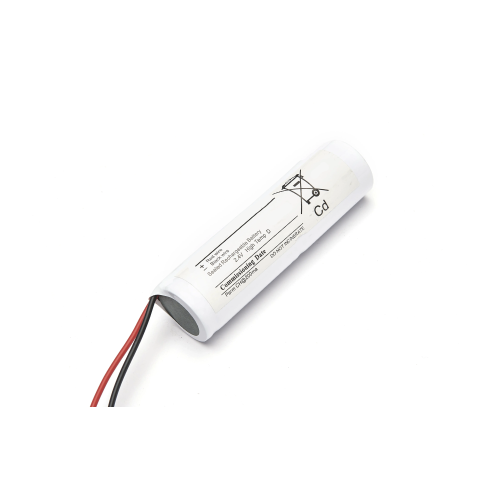
2 Cell Inline NiCd Emergency Battery & Leads (2.4V 4Ah) – D Cell
£14.25 Excl. VAT£7.00 Excl. VAT -
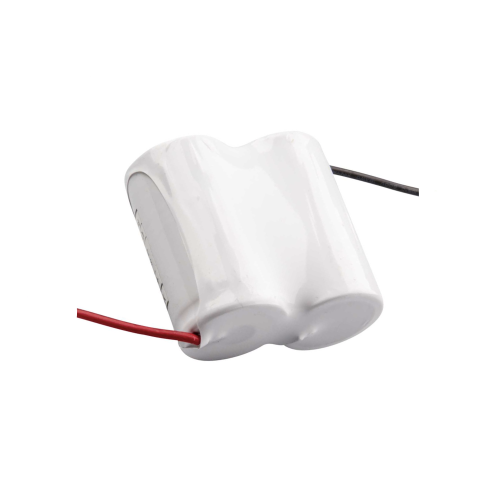
2 Cell SS NiCd Emergency Battery & Leads (2.4V 4Ah) – D Cell
£13.30 Excl. VAT£7.00 Excl. VAT -
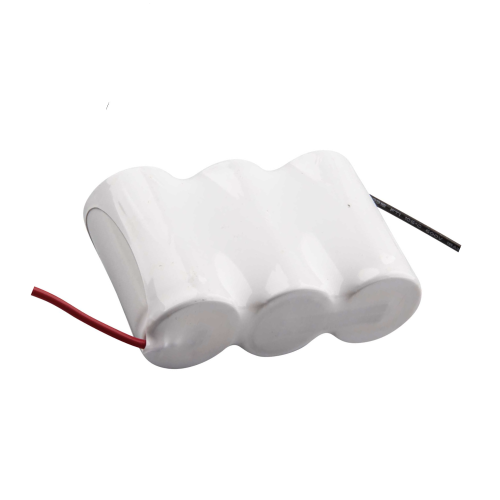
3 Cell SS NiCd Emergency Battery & Leads (3.6V 4Ah) – D Cell
£15.20 Excl. VAT£9.00 Excl. VAT -
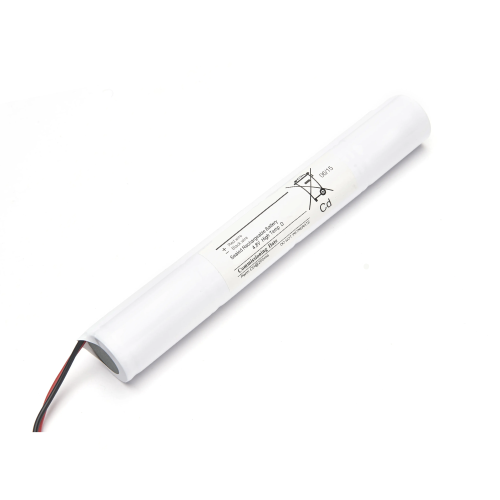
4 Cell Inline NiCd Emergency Battery & Leads (4.8V 4Ah) – D Cell
£20.90 Excl. VAT£11.00 Excl. VAT -
4 Cell SS NiCd Emergency Battery & Leads (4.8V 4Ah) – D Cell
£18.05 Excl. VAT£10.00 Excl. VAT -
5 Cell Inline NiCd Emergency Battery & Leads (6.0V 4Ah) – D Cell
£22.80 Excl. VAT£12.00 Excl. VAT -
5 Cell SS NiCd Emergency Battery & Leads (6V 4Ah) – D Cell
£23.75 Excl. VAT£12.00 Excl. VAT -
6 Cell Inline NiCd Emergency Battery & Leads (7.2V 4Ah) – D Cell
£27.55 Excl. VAT£15.00 Excl. VAT